
What Are Nicotine Pouches? A Beginner’s Guide to How They Work, What’s in Them, and What to Know
, 13 min reading time
, 13 min reading time
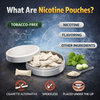
Nicotine pouches are small spit-free oral pouches that people place between the gum and upper lip so nicotine can be absorbed through the mouth. The CDC says they typically contain nicotine, flavorings, and other ingredients, and they do not require spitting.
That simple definition is the reason search interest has grown so quickly. People want something that feels more discreet than smoking, less messy than traditional smokeless tobacco, and easier to use in places where smoking or vaping is inconvenient. But a lot of content on this topic is either too vague or too promotional.
This guide covers the basics clearly:
Nicotine pouches are small fiber or microfiber pouches filled with nicotine and other ingredients. They are usually placed between the lip and gum, where nicotine is absorbed into the body through the tissues in the mouth. They are not smoked, not vaped, and not meant to be burned.
Most nicotine pouches are also marketed as tobacco leaf-free, which is one reason people often confuse them with nicotine replacement products. But in the U.S., the FDA classifies nicotine pouches as tobacco products, not as approved nicotine replacement therapy like patches or gum.
Ingredients vary by brand, but authoritative sources generally describe nicotine pouches as containing:
The CDC describes them broadly as small pouches containing a powder made of nicotine, flavorings, and other ingredients. A UK NHS user guide for nicotine pouches describes contents such as nicotine, water, plant-based materials, flavourings, and sweeteners.
That matters because many people assume “tobacco-free” means “nicotine-free” or “risk-free.” It does not. Nicotine is still the active ingredient, and nicotine is addictive.
Nicotine pouches work by releasing nicotine in the mouth while the pouch sits under the lip. The nicotine is absorbed through the oral tissues rather than through inhalation. The FDA and CDC both describe this oral placement between the lip and gum as the intended use.
The pouch is not supposed to be chewed, lit, or swallowed. Because it is designed as a spit-free product, normal swallowing of saliva during use is generally expected, but the pouch itself should not be swallowed. Brand and category guidance on oral nicotine pouches consistently make that distinction.
No. This is one of the biggest points of confusion.
The National Cancer Institute states there is no safe form of tobacco and notes that smokeless tobacco products can contain carcinogenic chemicals, especially tobacco-specific nitrosamines. That does not automatically mean nicotine pouches carry the exact same risk profile as all traditional smokeless tobacco products, but it does show why “nicotine pouch” and “snus” should not be treated as identical terms.
No. This is another common misunderstanding.
NHS guidance on nicotine replacement therapy describes products such as patches, gum, lozenges, inhalers, and spraysas proven stop-smoking aids. Those are designed and regulated specifically to help people quit smoking.
Nicotine pouches are different. In the U.S., the FDA treats them as tobacco products, not as approved stop-smoking medications. Some adults may personally use them instead of cigarettes, but that is not the same as saying they are FDA-approved cessation products.
That distinction is important for a factual SEO article because many low-quality pages blur it.
Usually, nicotine pouches are marketed as tobacco leaf-free, but in the U.S. they can still fall under tobacco-product regulation. The FDA’s current nicotine pouch pages classify them as a type of tobacco product even though, unlike some other oral tobacco products, they can be used without spitting.
So the accurate phrasing is:
The main reasons usually include:
That convenience is a major reason for growth in the category. The CDC has also tracked nicotine pouch use as a distinct product category, including among youth, which shows the category is now significant enough to be monitored separately in public-health data.
The cleanest factual answer is: they are not harmless.
Nicotine itself is addictive, and the CDC states that nicotine pouches can contain high levels of nicotine. Public-health guidance also warns that all tobacco products, including nicotine pouches, carry risks and should not be used by youth, young adults, or people who do not already use nicotine.
There are a few important facts here:
The National Cancer Institute notes that nicotine is highly addictive, and addiction risk is one reason nicotine initiation at younger ages is a serious concern.
The CDC specifically notes that nicotine pouches can contain high levels of nicotine, which matters for new users and for accidental exposure.
Nicotine replacement therapies are described by NHS as established, proven stop-smoking products that provide nicotine without the dangerous chemicals in cigarettes. That does not automatically place recreational nicotine pouches in the same category or make them harmless.
A well-written article should keep that nuance intact:
This needs careful wording.
The FDA has authorized the marketing of certain nicotine pouch products, including a set of ZYN nicotine pouch products, after scientific review. In January 2025, FDA announced the authorization of 20 ZYN nicotine pouch products, and the FDA later listed those authorized products on its nicotine pouch page.
But “authorized to market” is not the same as saying a product is medically approved as safe. The FDA’s tobacco-product authorization framework is different from drug approval. A good SEO article should not overstate this.
Public-health and nicotine guidance strongly support avoiding nicotine pouches if you are:
The NHS user guide also explicitly says people who have never smoked should not use nicotine pouches.
This is where the article needs precision.
Some adult smokers may switch away from cigarettes toward non-combustible products, but nicotine pouches are not the same thing as approved nicotine replacement therapy. NHS guidance points people trying to quit toward therapies like patches, gum, lozenges, inhalers, and sprays because those are the established quit-smoking tools.
So the factual way to write this is:
Strength varies a lot by product. The CDC notes that nicotine pouches can contain different amounts of nicotine per pouch, and some contain high levels of nicotine. The FDA’s list of currently authorized ZYN products, for example, includes multiple 3 mg and 6 mg variants.
This is one reason beginners should pay attention to the amount of nicotine per pouch rather than buying only on flavor or brand name.
Suggested internal link:
Smoking involves combustion, which creates many harmful chemicals. NHS guidance on quit-smoking products specifically contrasts nicotine-containing alternatives with the dangerous chemicals created by cigarettes.
Vaping delivers nicotine through aerosol inhalation.
Nicotine pouches deliver nicotine through the mouth, with no smoke and no vapor.
That does not rank the products from best to worst medically by itself, but it clearly explains the route of use.
They are oral nicotine products placed between the lip and gum so nicotine can be absorbed through the mouth. They are used without smoking, vaping, or spitting.
Many nicotine pouches are tobacco leaf-free, but in the U.S. the FDA still classifies nicotine pouches as tobacco products.
No. Snus is a smokeless tobacco product, while nicotine pouches are typically tobacco leaf-free oral nicotine products.
No. Nicotine gum is a form of nicotine replacement therapy used for quitting smoking; nicotine pouches are regulated differently and are not the same kind of approved stop-smoking aid.
They are not harmless. Nicotine is addictive, and nicotine pouches can contain high levels of nicotine.
No. The CDC says nicotine pouches do not require spitting.
Nicotine pouches are small spit-free oral nicotine products that sit between the lip and gum and deliver nicotine through the tissues in the mouth. They are not smoked, not vaped, and usually do not contain tobacco leaf, but they are still nicotine products with addiction risk.
That is the most accurate beginner definition:
Use these internal links naturally in the published version:


Your age will be verified by a third-party age verification service when you place an order. Adult signature may be required upon delivery.
You are not old enough to visit the shop yet.